
Authentic Personal Branding is Impossible.
I believe if we truly understood the three words inside this phrase, we would stop using them together entirely.

Every time I stumble across a line like “Build a profitable, authentic personal brand in 30 days,” I get angry. Not because I don’t want people to try and build a life or revenue source for themselves. I am all for people getting out there and having a go. I get angry because what they are selling is impossible, yet people often don’t have the capacity or patience to question the dream being sold.
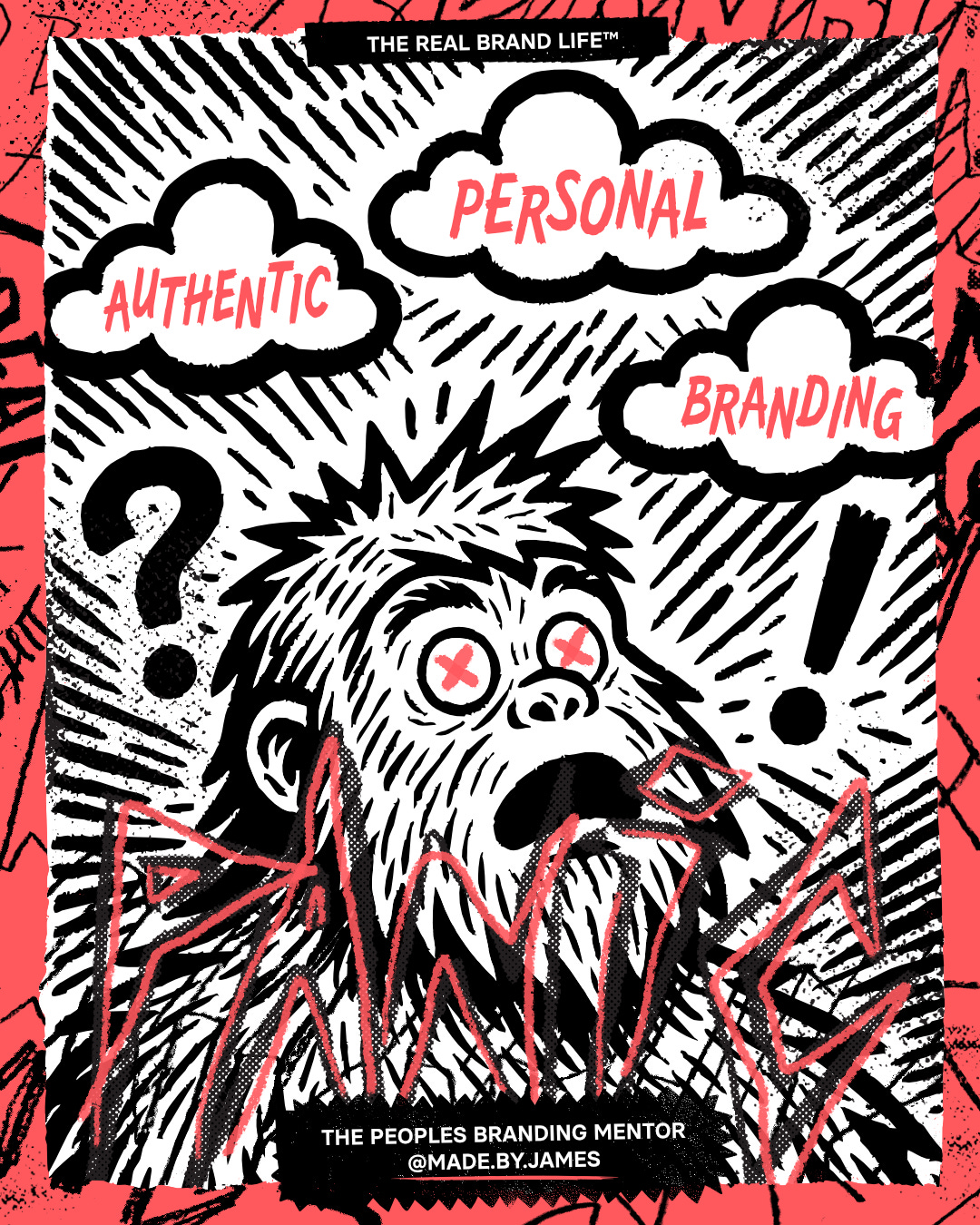
On the surface, it sounds empowering. It speaks to identity, freedom, ease, self expression and financial independence. It promises that you can simply “be yourself” and the world will reward you both emotionally and economically… wouldn’t that be fu*king great.
It’s the marketing equivalent of someone saying:
“Eat pizza every day, do no exercise, and become an underwear model for Calvin Klein”
The reason these lines work isn’t because people are naïve. They work because the words themselves are incredibly seductive.
Authentic. Personal. Brand.
Three words with emotional weight. They tap into our ego, they sound meaningful and they feel modern enough to make us believe we’re part of the right conversation or playing the right game. Put them together and you get a phrase that sounds progressive, intentional and spiritually aligned with how many people want their work and identity to exist in the world.
But when you begin to examine the phrase with any level of discernment, the whole thing becomes far less solid than it first appears. And that’s why I’m writing this little stacko, not to criticise individuals who teach or participate in this industry, but to question the language itself. I want more ideas people and brands to win. I think we do that by deepening our knowledge of the world we are a part of.
I believe if we truly understood the three words inside this phrase, we would stop using them together entirely.
Let’s start at the (somewhat) beginning.
The idea of personal branding became mainstream in 1997, when Tom Peters published his well known article The Brand Called You in Fast Company. His message was simple. Just like companies build brands, people could do the same. You could shape how you’re seen, choose what you stand for and intentionally build a reputation around that thing.
At the time, this thinking resonated as the workplace was changing and careers were becoming less about one employer for life and more about individuality, flexibility and standing out in a crowded world, no doubt largely due to the rise of the internet.
From that single article, a whole industry began to form. Workshops and seminars appeared. Books followed. LinkedIn became the professional stage for it, and eventually social media, which once felt like a space for expression, turned into a place where identity could be packaged, positioned and monetised. What started as “show up professionally” slowly evolved into “carefully shape a persona that benefits you financially.”
But if we step back further, the behaviour itself existed long before Tom Peters wrote about it. Humans have always cared about reputation. Long before content creators, personal story frameworks or carefully timed vulnerability posts before a workshop sale, reputation was earned through behaviour, reliability, craft, skill and contribution.
A master blacksmith did not sit down to refine his tone of voice or adjust his reel creation cadence. His steel did the talking. A baker’s bread was their message. A healer’s competence was their positioning strategy. Reputation travelled through communities because of lived evidence, not because of marketing techniques. The brand was built through evidence, community and trust.
Even before the term personal branding existed, the idea was already forming. Books like Positioning: The Battle for Your Mind in the early 1980s encouraged people to think about shaping how they were perceived. Earlier career and self improvement writing hinted at the same idea with lines like “sell yourself,” “make an impression,” and “dress the part.” These were early pieces of thinking that eventually grew into what we now call personal branding.
Which brings us back to our three words, because they are the hinge on which the entire contradiction turns. I want to spend a few minutes breaking down these words individually.
Authenticity is often described as being honest, raw and consistent with how you feel inside. It sounds like the idea of showing up without filters and without pretending. But if any of us showed up in our completely unedited state every day, it would not go well. Think about the tired days, the grumpy days, the insecure days, the days where you are short with people or irritated at the world. If you put all of that online in real time, most people wouldn’t celebrate you for being authentic. They would judge you, misunderstand you or, as is popular today, cancel you.
Pure authenticity is rarely convenient, socially acceptable or comfortable for others. And whether we admit it or not, most of us adjust how we show up depending on who we are with and what the situation requires. In social psychology, we naturally mirror others. Body language, tone, pace, even facial expressions adjust without conscious effort. This is known as the chameleon effect and it’s linked to empathy and bonding.
People who mirror well are often perceived as:
• more likeable
• more trustworthy
• more competent
This is not authenticity. It’s connection strategy wired into us biologically. The moment you do that, you are no longer being fully authentic. You are being human. You are being considerate, strategic or protective. Those are not bad things but, they are far removed from true authenticity.
The word personal introduces another complication for me and it may just feel like semantics, but brands do not exist in isolation. A brand, by definition, requires an audience, perception, repeatability and memory. A person can call themselves something, but they only become it when others recognise the behaviour consistently. That means a brand cannot be purely personal because it does not belong solely to the creator. A brand isn’t something you create and own by yourself. Other people shape it based on how they experience you. The idea that anyone can fully control or own a brand, especially a personal one, overlooks a simple truth. Meaning is created together, not alone.
And then we reach the final word in this trio, branding. Branding isn’t something that happens by accident. It is intentional, planned and carefully put together. It means choosing what to show, what to leave out and what to repeat until it becomes recognisable. Branding is not a raw or unfiltered reflection of a person or a business. It is a shaped version manufactured for a purpose… to make fucking money.
Whether we are talking about companies or individuals, brands are created to influence how people see us and respond to us. That’s why we have brand designers, strategists and consultants. They are built to get attention, create trust, stand out or help someone make a decision. And when making money is part of the goal, which it usually is, authenticity naturally takes a back seat and effectiveness becomes more important. Saying to someone “buy my product because I want more money” is never the best approach, but if you were being “authentic” that’s the actual truth.
At that point, the brand becomes something we use. It becomes a tool to guide behaviour and shape perception rather than an honest reflection of every part of who we are. That doesn’t make it wrong, not at all. It just means it isn’t purely authentic. It can’t be.
When you put the words back together and look at the phrase “Authentic Personal Branding,” it stops feeling clear or meaningful. The contradictions become obvious and it becomes clear that the person using it may not fully understand what branding actually is.
Authenticity pushes against being edited or presentable all the time, while branding somewhat depends on it. The word personal suggests individuality and ownership, yet a brand only exists when other people interpret and respond to it. One aims for raw honesty and openness. The other requires intention and structure.
But… what happens if we change just one or two of those words? What if instead of authentic, we used aligned?
While many people believe they are building something authentic, what they are actually building is something aligned. Alignment allows for strategy without too much distortion. It allows for integrity without feeling the pressure to expose everything and opening Pandora’s box every day to the world. It accepts that some parts of our life remain private and privacy is not dishonesty. Alignment allows a brand to feel human while still being shaped, intentional and useful.
So perhaps the real issue isn’t the existence of personal branding. I mean, it’s a multi billion dollar industry. Maybe it is the language wrapped around it.
So what if we reframed it?
Instead of authentic personal branding, what if we called it aligned human branding?
Aligned means you are acting in accordance with your values, not performing a perfectly curated version of yourself. It gives room for growth and it allows you to be intentional without being artificial.
Human replaces the idea of personal being about one isolated individual. Human suggests belonging, community and contribution. It acknowledges that brands live between people, not inside a single person.
Branding itself does not change. It is still a strategic and intentional process that focuses on meaning, clarity, consistency, evidence building and perception. The difference is that when we shift the language from authenticity to alignment, we move into something achievable rather than something that sounds appealing but is philosophically impossible to fully live out.
Authenticity doesn’t need to be performed in front of an audience. It can be reserved for the people who actually earn it. Our loved ones, our closest friends, the people who stay when you need them the most… they are the ones who get access to our unfiltered, imperfect, fully human selves.
That is not a compromise. It is self preservation. It is boundaries. And it is absolutely okay.
See you punks next week.